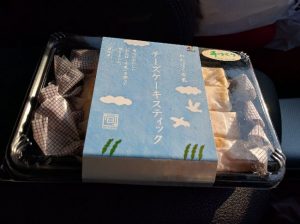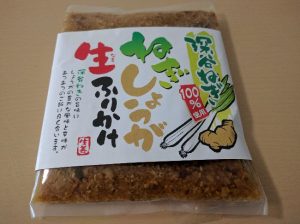
I have been visiting roadside stations around Japan as part of my ongoing search for regional souvenirs. The more places I visit, the more I rediscover how appealing these stations can be, and each visit makes me eager to explore the next one.
Buying souvenirs at a roadside station during a trip is especially enjoyable because they bring the memories of that journey back to life even after you return home.
This time, at the end of December, I finally visited Michi-no-Eki Kawaguchi Angyo, a place I had kept postponing simply because it was so close to home. Here is my full report.
The station is attached to the Kawaguchi Greenery Center, a promotional facility for Angyo, an area long known for its plant nurseries. That combination raised my expectations, so let me show you what the visit was actually like.
What Is Michi-no-Eki Kawaguchi Angyo?
Where Is Michi-no-Eki Kawaguchi Angyo?
Michi-no-Eki Kawaguchi Angyo is located at 844-2 Angyoryoke, Kawaguchi, Saitama Prefecture.
The nearest expressway exits are Soka IC and Kawaguchi-Higashi IC on the Tokyo Gaikan Expressway, as well as Araijuku IC and Angyo IC on the Shuto Expressway Kawaguchi Route. After leaving the expressway, the station is about a ten-minute drive away.
If traffic is flowing smoothly, it can be reached from central Tokyo in roughly thirty minutes.
Because the station is in an urban area, public transportation is also convenient. Buses run from the east exit of JR Kawaguchi Station and the west exit of Soka Station on the Tobu Line to the Kawaguchi Ryokka Center bus stop.
What Makes Michi-no-Eki Kawaguchi Angyo Distinctive?
The information I found before visiting strongly emphasized its role as a center for promoting Angyo’s horticultural and nursery culture. Its slogan is “A Relaxing Station of Greenery and Flowers,” and the attached Kawaguchi Greenery Center, also known as Jurian, has a very strong presence. That can make it difficult to tell in advance how much it functions as an ordinary roadside station.
I will describe the details below, but to be completely honest, the facility felt about 90 percent greenery center and 10 percent roadside station.
That impression depends on how one defines the role of a roadside station, of course, but an especially large amount of space is devoted to the plant market and exhibitions about local horticulture.
Even so, there were several points that visitors should know about. Reading this report before going should help you make the most of your visit.
What Were the Souvenir Shop and Sales Areas Like?
Here is a photo-based report from my visit at the end of December 2018.
A Look Around the Sales Areas
Following the car navigation system brought me to this sign, which reads “JA Saitama Farmers’ Produce Market.”
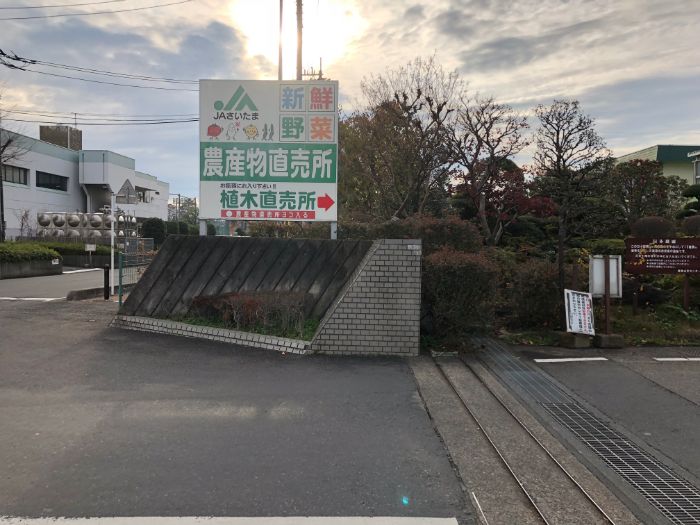
There was a large parking area here, so I parked the car.
I also found an illustrated map of the Angyo area.
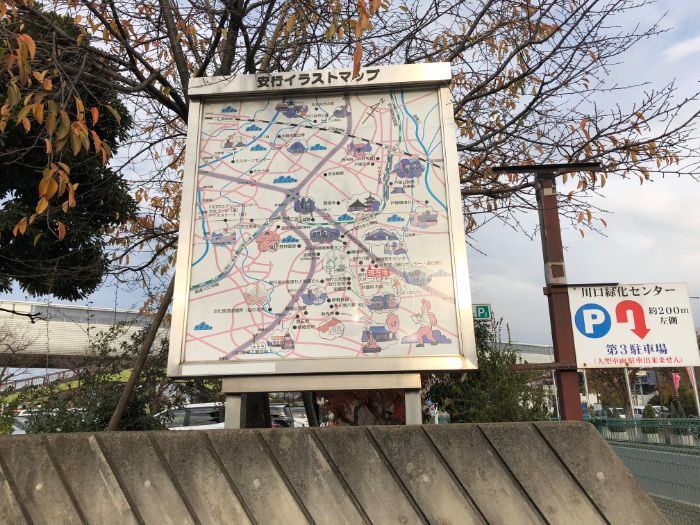
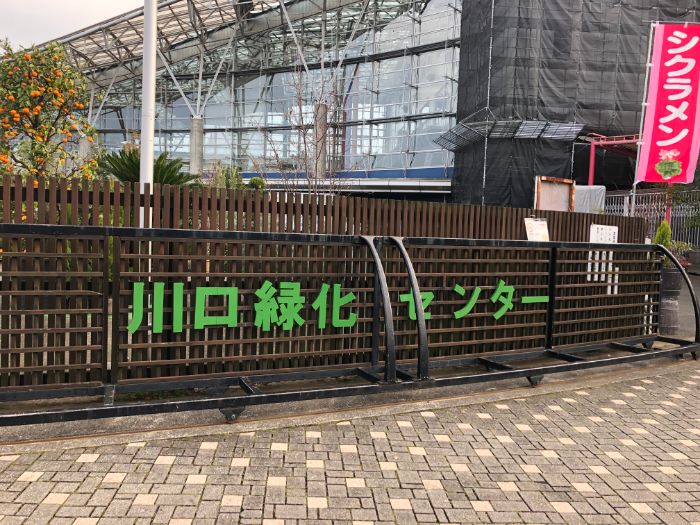
At the entrance to the main facility, the Kawaguchi Greenery Center name is displayed prominently, just as expected.
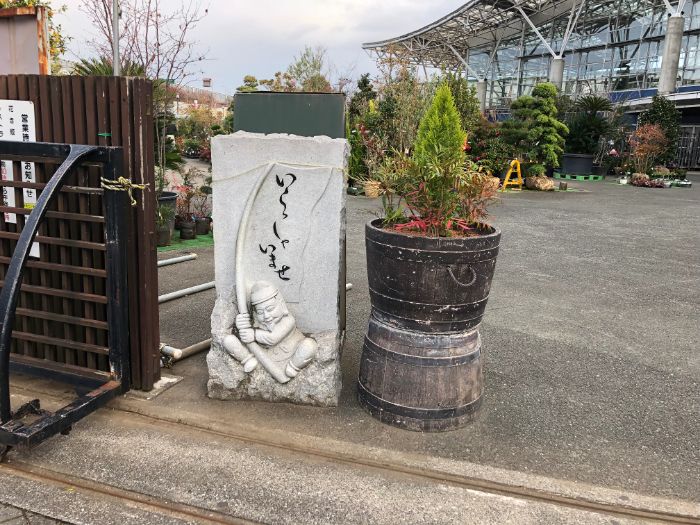
This was where I finally found the words “Michi-no-Eki.”

The guide map shows that the main building has five floors, which is quite impressive.
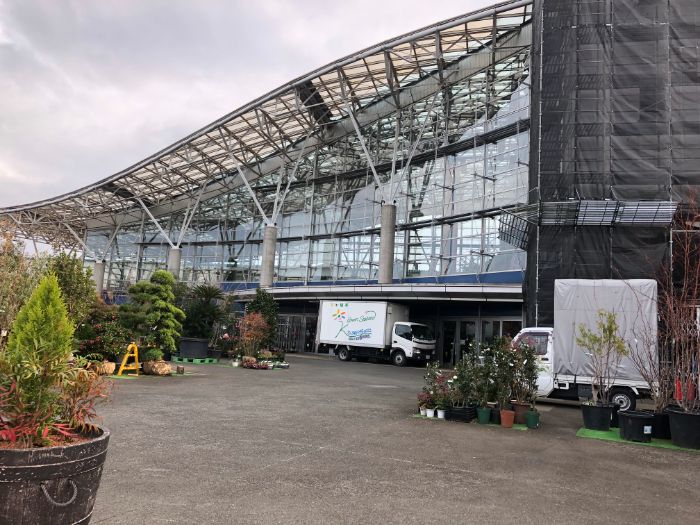
Passing through the gate, a substantial building and a remarkable number of trees come into view.
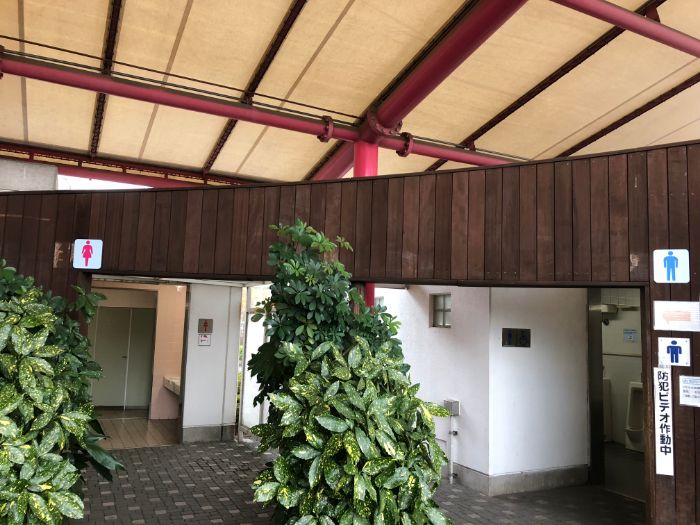
The restrooms are on the right, and even their exterior has been designed with trees and greenery in mind.
Farther ahead is an unusual space that initially looks like a vending-machine corner, but there is actually a soba restaurant in the back.
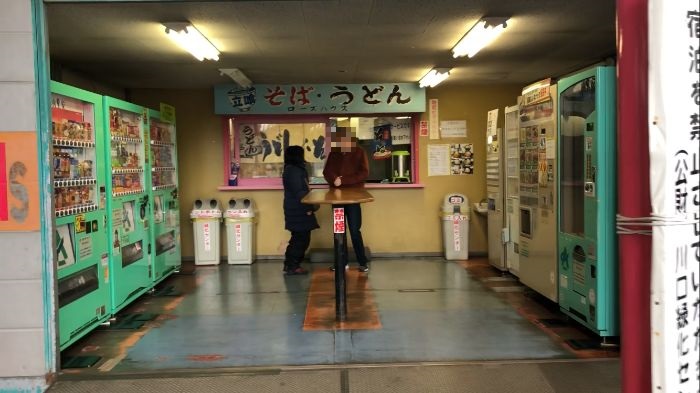
I then entered the building.
The first thing inside is an information corner.
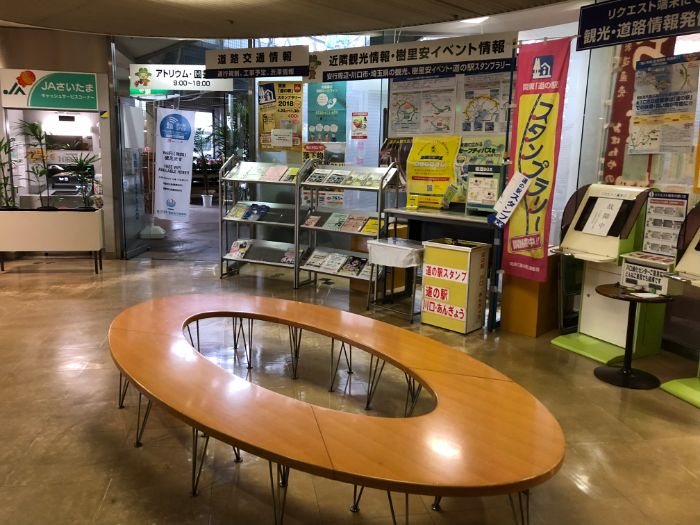
There was a shop, so I went in to take a look. Its opening hours are 10:00 a.m. to 5:00 p.m., which are relatively short, so keep that in mind when planning a visit.
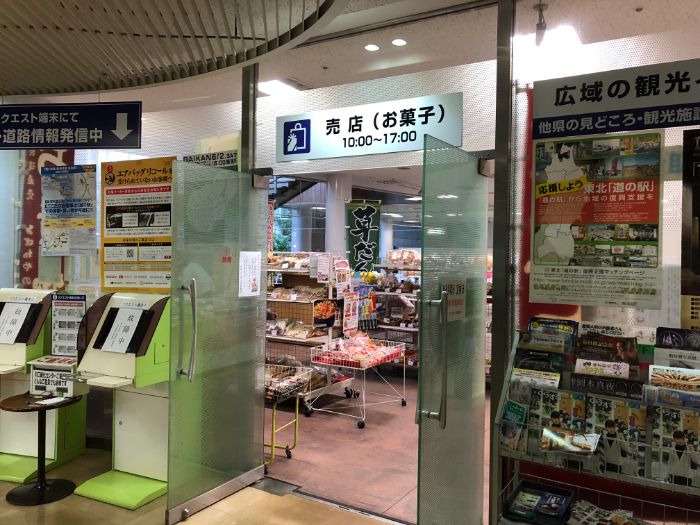
Surprisingly, this may have been the smallest sales area of any roadside station I had visited.
The entire souvenir section consists of only about three shelving units.
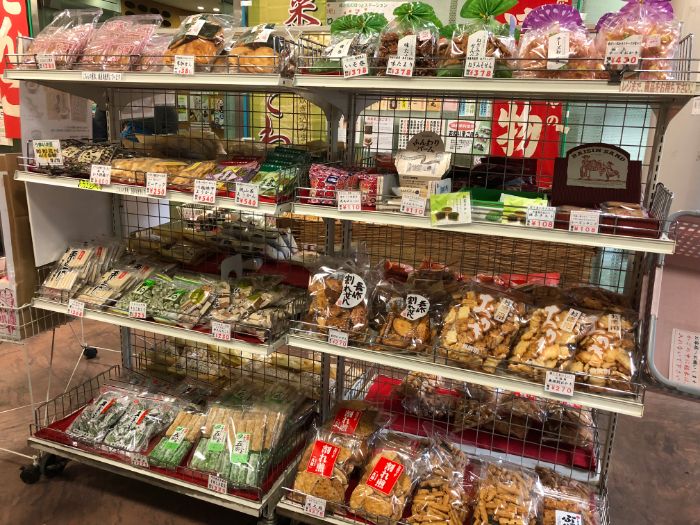
Naturally, local sweets are available, but it is unusual for a shop to feel this temporary and compact.
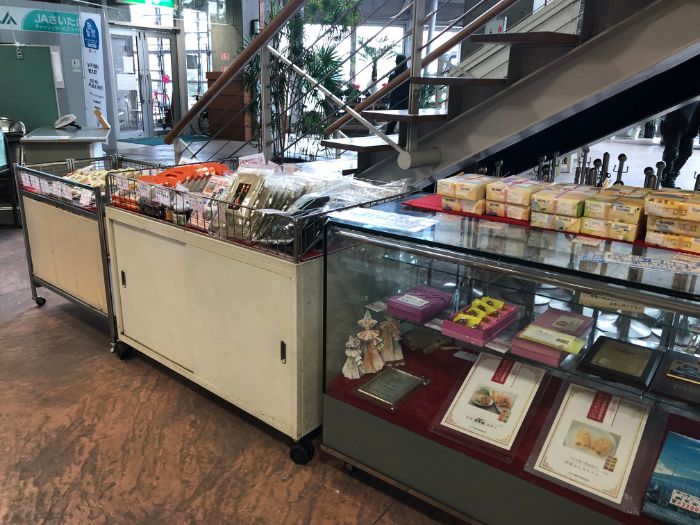
It still serves the basic function of a small convenience shop.
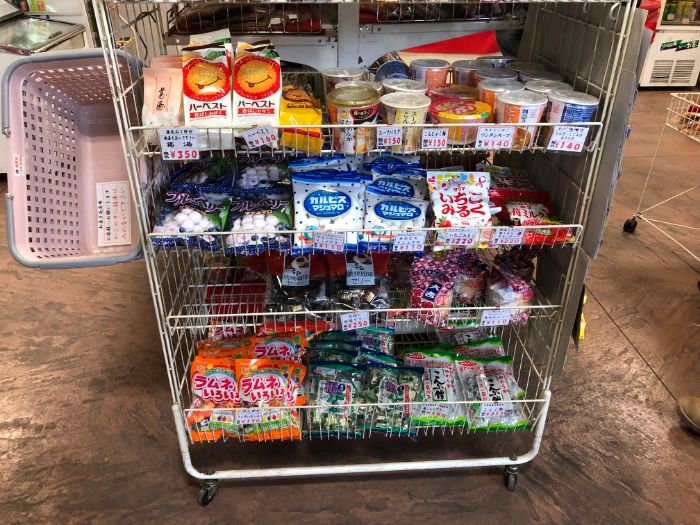
The cramped size was a little startling, although there is a separate farmers’ market, so other roadside stations may have a similar overall scale when both spaces are considered together. This area is famous for rice crackers, and the shop offered an impressive range and quantity of senbei.
Since Soka, another city celebrated for rice crackers, is nearby, I naturally bought several bags. My tasting notes and photos appear later in this article.
Food and Other Facilities at Michi-no-Eki Kawaguchi Angyo
Since I was already there, I also explored the areas beyond the souvenir shop.
Immediately beside the shop is a very large direct-sales area for trees and plants. Its size makes it clear that this is the facility’s main attraction.
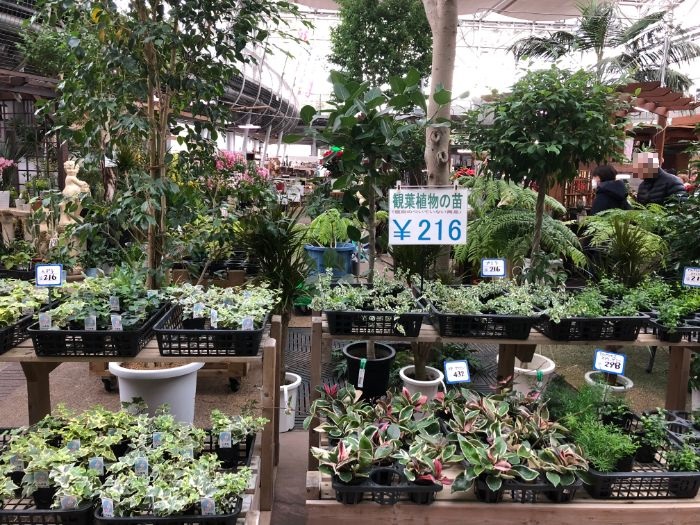
For anyone interested in plants, this would be an excellent place to visit.
There is a staircase beside the shop leading to the second floor, so I went up. A large object on display turned out to be a replica of a traditional ropework serpent.
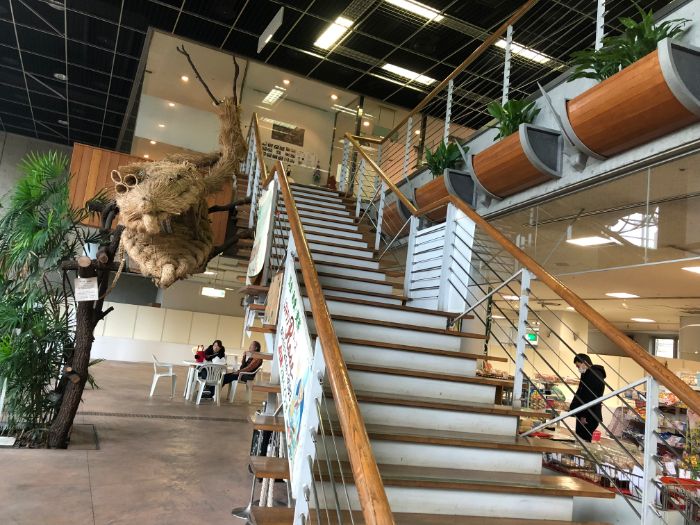
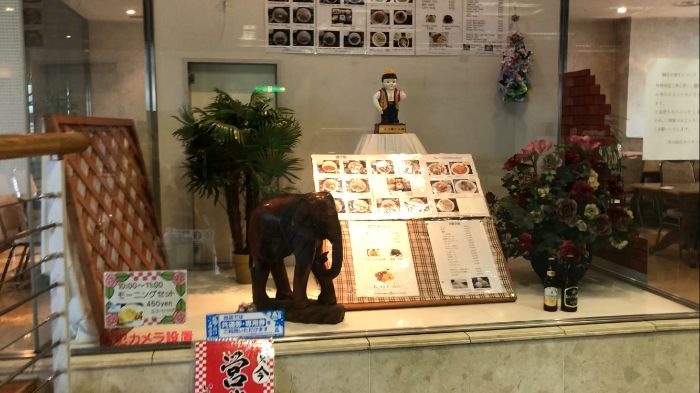
The second floor contains a spacious exhibition area and a restaurant.
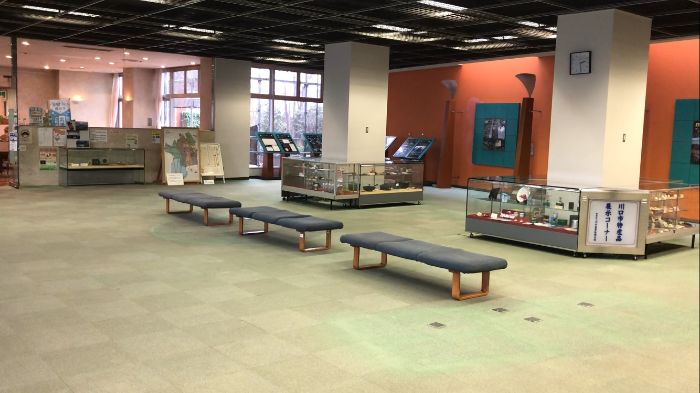
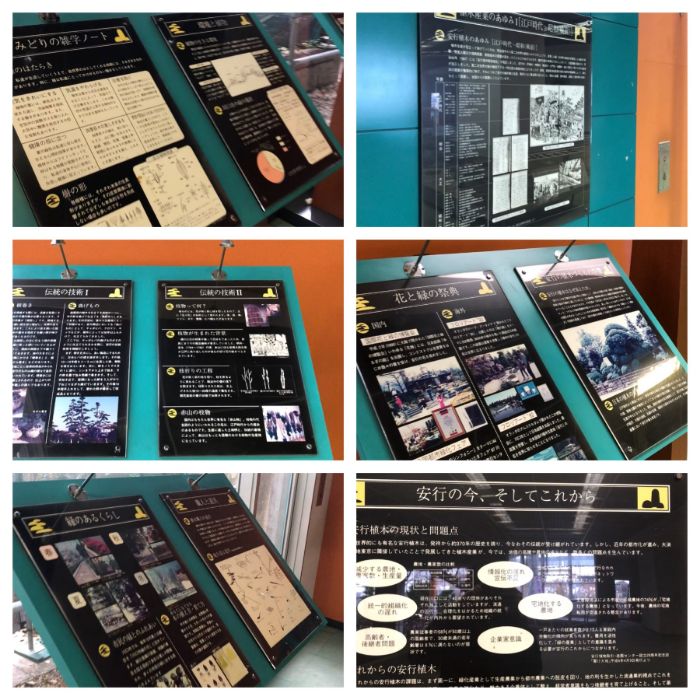
The exhibition uses panels to explain the history of local greenery, nursery production, and horticultural culture.
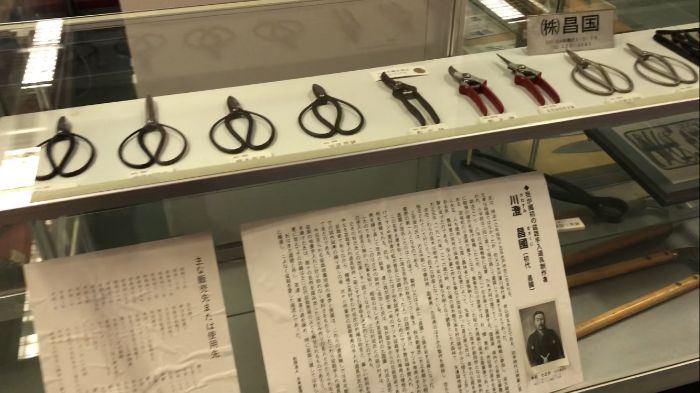
A real pair of pruning shears was also on display.
This is the view of the plant market from the second floor.

That concludes the tour of the main building.
Even after seeing it in person, the facility clearly feels more like a greenery center than a conventional roadside station. Few roadside stations present their concept this consistently. Trees and greenery may be a specialized theme, but this place will be irresistible to devoted gardening and plant enthusiasts.
There is also a farmers’ produce market in a separate building. Prices appeared very reasonable; for example, two kilograms of mandarins were offered for ¥500.
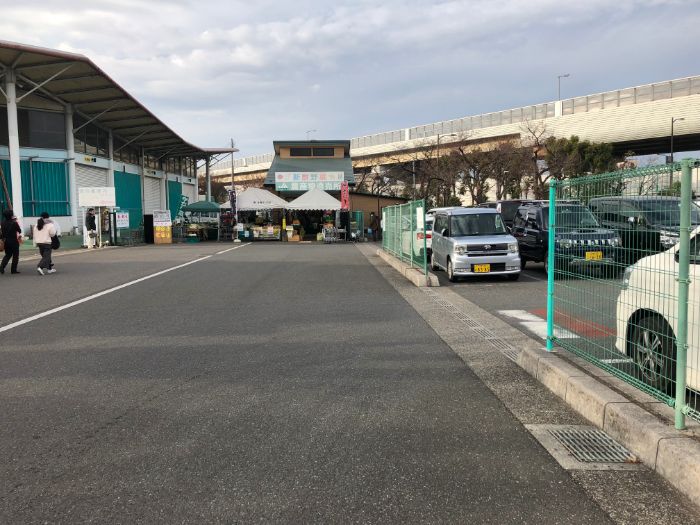
Local shoppers seemed to head directly here, showing that this building also plays an important role as part of the roadside station.
That concludes my report on Michi-no-Eki Kawaguchi Angyo.
Rice Crackers Purchased at Michi-no-Eki Kawaguchi Angyo
Here are the rice crackers I bought at Kawaguchi’s Angyo roadside station.
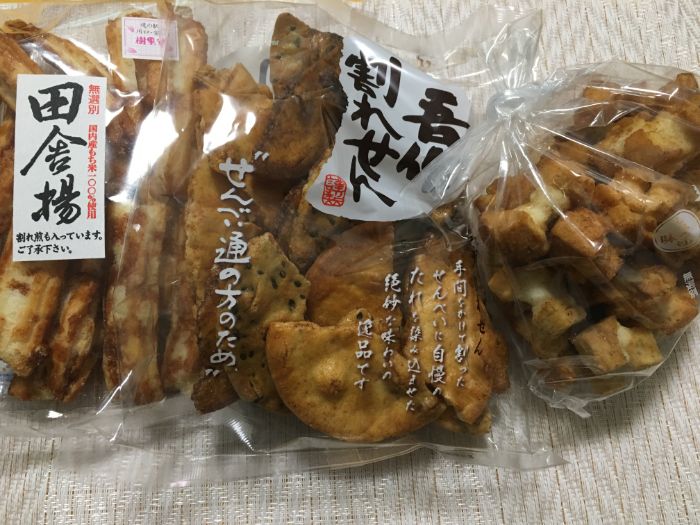
Let us look at them one by one.
Unsorted Hand-Fried Soy Sauce Mochi by Nanakoshi Seika
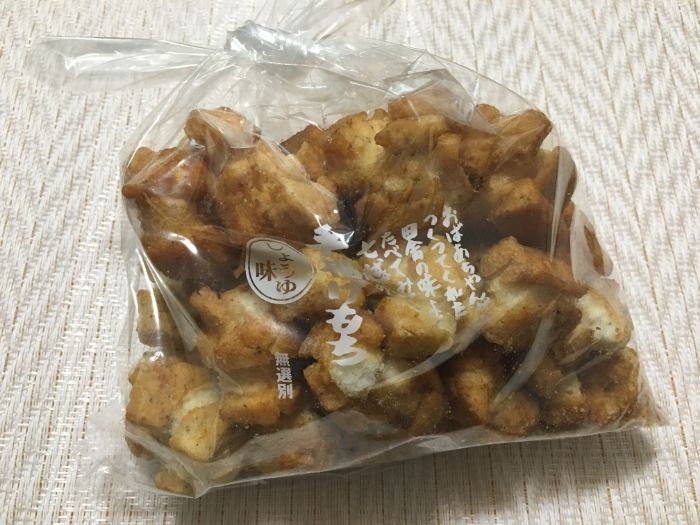
I started with these rice crackers. The bag contains 250 grams.
Printed on the clear plastic package is a friendly message: “This is the country-style flavor Grandma used to make! Give it a try—Nanakoshi hand-fried mochi.”
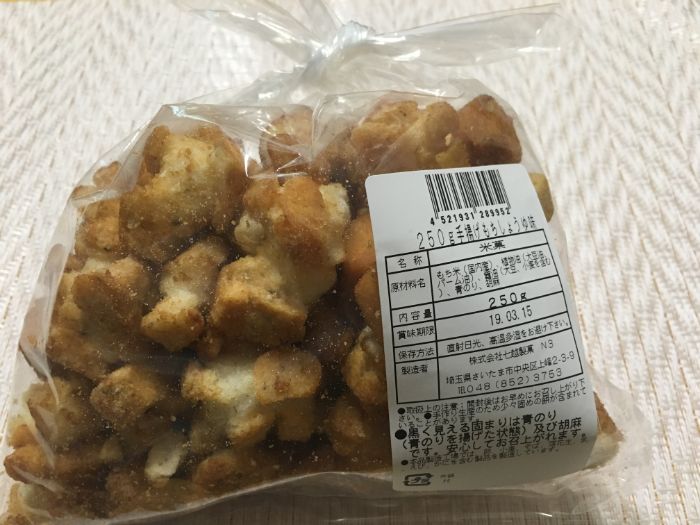
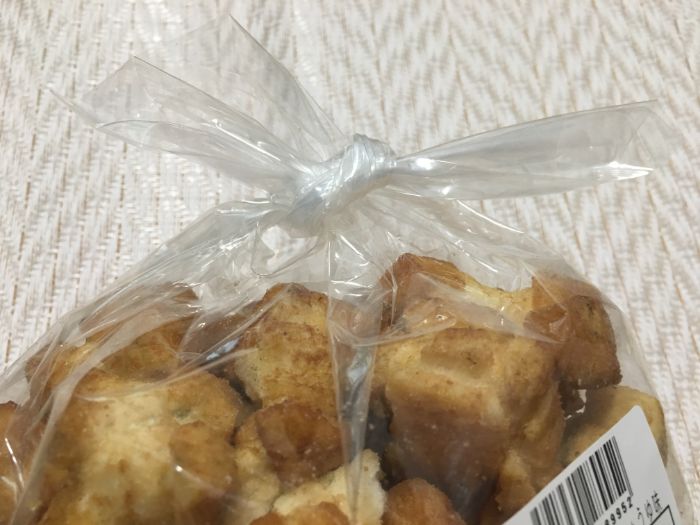
The plain packaging and simple way the bag is tied give it a handmade atmosphere.
This is exactly the kind of rustic product that becomes especially tempting at a roadside station.

Now, let us taste one.
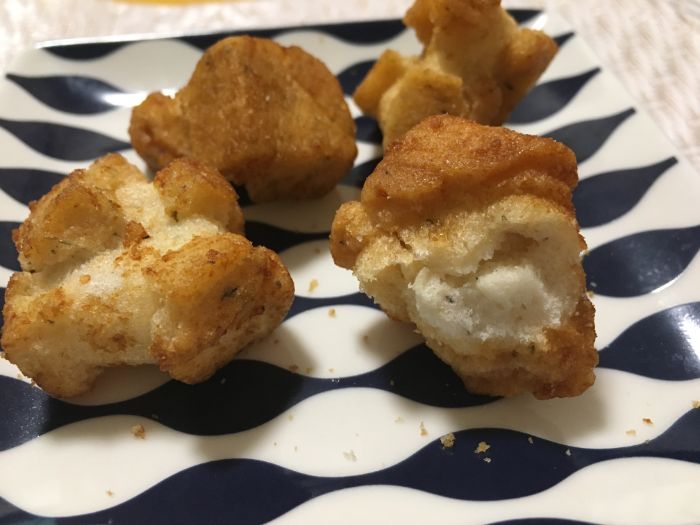
Each piece is large—too large to eat in a single bite—and its fried shape resembles sata andagi, the Okinawan doughnut.
After the bold, crunchy texture comes the roasted fragrance of soy sauce and the rich savoriness of the frying oil. The aroma of aonori seaweed makes the flavor even more moreish.
As the “unsorted” label suggests, some broken, bite-sized pieces had settled at the bottom of the bag.
Those pieces were easy to pop straight into the mouth, and some had absorbed an especially generous amount of soy sauce. They felt like a welcome little bonus.
Inaka-age by Dashi Arare Honpo (Akane)
Next is another bag of fried rice crackers.
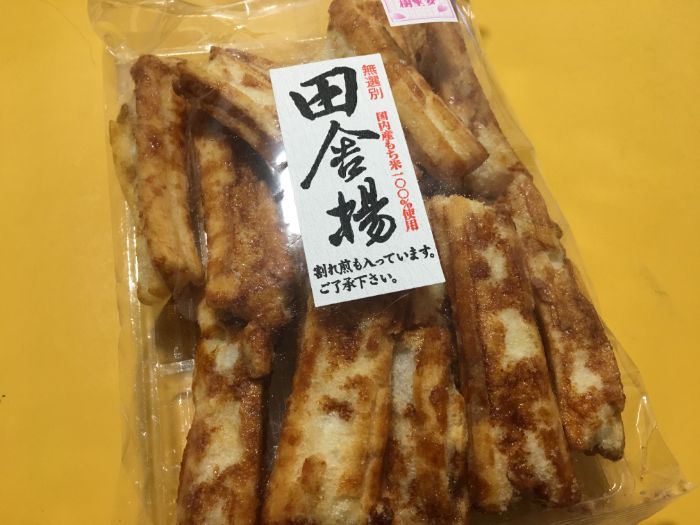
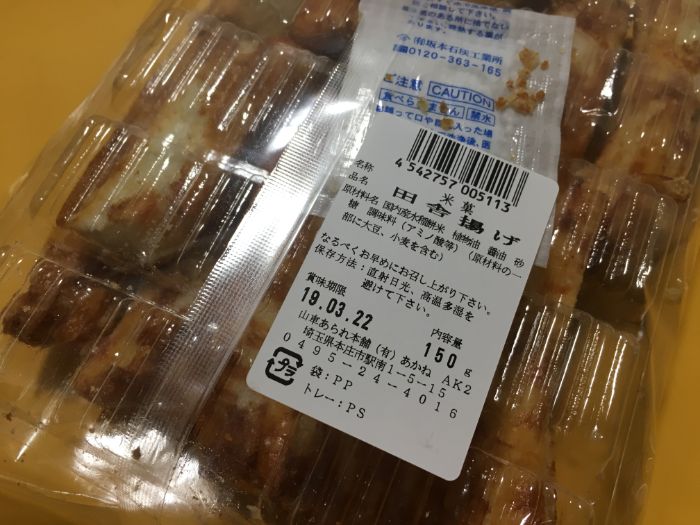
The bag contains 150 grams.
These are unusually long, stick-shaped pieces of fried mochi.
Their light, crisp bite and juicy sweet-and-savory soy sauce seasoning are irresistible. The flavor is exceptionally addictive.
Even though each piece is large and satisfying, I could hardly stop reaching into the bag and almost finished the whole thing in one sitting.
This is unquestionably a product I would buy again.
It had been a long time since I had enjoyed okaki this delicious.
Gosaku Ware-sen by Miyasaka Beika
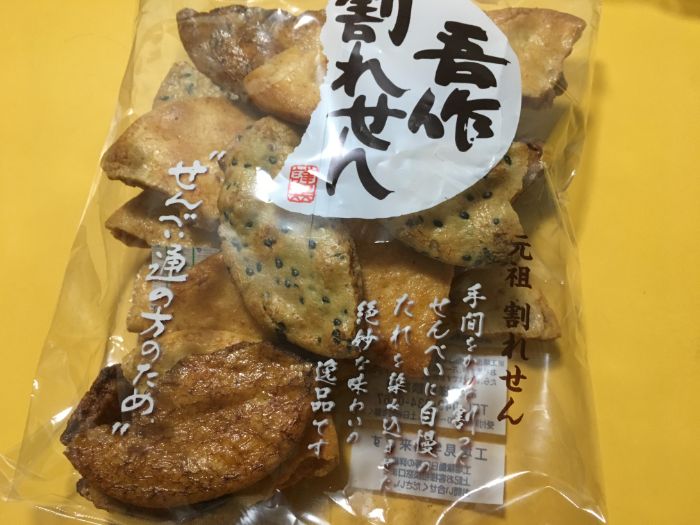
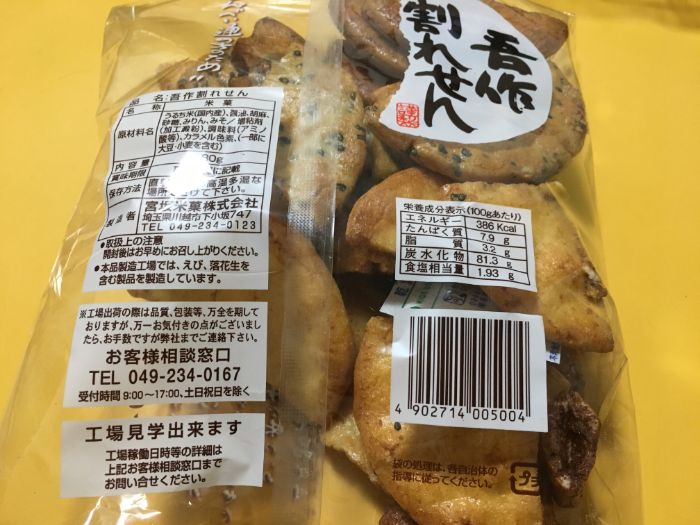
The bag contains 180 grams.
This value-packed assortment includes firm, hard-baked soy sauce crackers and sesame crackers in broken pieces.
I especially liked that soy sauce had soaked thoroughly into the exposed broken edges.
All three products were delicious. Although the small shop offered limited choices, every purchase turned out to be a winner.
The souvenir selection at Angyo is not extensive, but I would gladly return for these rice crackers.
Thank you for the meal!
Basic Information for Michi-no-Eki Kawaguchi Angyo
Here is a concise summary of the essential information.
| Name | Michi-no-Eki Kawaguchi Angyo |
|---|---|
| Parking | 167 standard vehicles and 5 large vehicles |
| Convenience Store | None; a small shop is available |
| Dining | Restaurant and soba restaurant |
| Shopping | Farmers’ produce market and souvenir shop |
| Gas Station | None |
| Address | 844-2 Angyoryoke, Kawaguchi, Saitama Prefecture |
| Website | Michi-no-Eki Kawaguchi Angyo |
I found excellent rice crackers here, but visitors hoping to compare a wide selection of Saitama souvenirs beyond senbei may find the shop somewhat limited.
If you would like to browse and choose from many different products, be sure to see the page below as well.