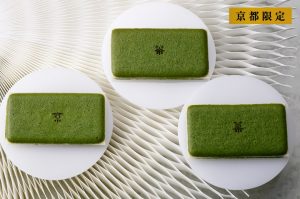
The history of yatsuhashi, nama-yatsuhashi, and annama
Yatsuhashi is one of Kyoto’s best-known souvenirs, and Honke Nishio Yatsuhashi is recommended among the many specialists. The business traces its history to 1687, when white rice cakes served at the Yatsuhashiya Bairin teahouse became popular with travelers. Kyoto yatsuhashi appears in two broad forms: a firm baked cracker and a soft, mochi-like confection. At Honke Nishio, the unfilled soft sheet is called nama-yatsuhashi, while the folded version containing sweet bean paste is called annama.
Origins of the baked form
The baked sweet is associated with Yatsuhashi Kengyo, a celebrated koto musician active in the Edo period. A story says that he advised a teahouse owner on using rice left in the serving tub. After his death, admirers created a molded cracker resembling a koto, and it became popular. Honke Nishio developed its baked type in 1689. The twelfth head of the Nishio family promoted it at international exhibitions; it won a silver award at the 1889 Paris Exposition and was recognized as a representative Kyoto confection in Japan by 1905. Its gently curved shape also made it easier to carry and recalls a bridge or the body of a koto.
Beautiful appearance, package, and flavor
The wrapping is immediately recognizable as Kyoto. Designs include a large bridge surrounded by the Gozan bonfires, shrine gates, and cherry blossoms, or a quieter composition with irises and the Honke Nishio mark. The baked yatsuhashi has a crisp bite and fills the mouth with cinnamon or matcha fragrance. Its sweetness is restrained, so it works well with tea. Boxes have traditionally been affordable, and the baked type keeps longer than fresh sweets. A gold-leaf product called Ohirome received a gold award in a confectionery and biscuit category at the 2009 Monde Selection.
Enjoying nama-yatsuhashi and annama
Nama-yatsuhashi first feels silky on the tongue, with the aroma of the powder on its surface, then becomes soft and yielding as it is chewed. Annama adds the flavor and richness of sweet bean paste. Besides classic cinnamon and matcha, the company has offered strawberry, baked sweet potato, and many other variations—around twenty-one in total—with seasonal and event packages. This variety makes it easy to choose for different recipients.
Shiramochi, the sweet at the origin
Honke Nishio also sells shiramochi, representing the white rice cake from which the business began. Soft white mochi is served with kinako soybean flour, kuromitsu syrup, and a small kuromoji pick. Eating it is a way to imagine the travelers who once stopped at the teahouse centuries ago.
Creative ways to serve yatsuhashi
Nama-yatsuhashi can be baked or fried for a different texture. Several sheets can be layered with ice cream, custard, or whipped cream to make a small mille-feuille. Crisp baked yatsuhashi can be served like crackers with dips; chocolate mousse, green-apple mousse, or even lightly salty cream cheese can complement its restrained sweetness. A tasting party with several flavors is another enjoyable use.
A classic gift for international visitors
Yatsuhashi is a familiar Japanese souvenir, but it can feel new to overseas recipients. The old Kyoto imagery on the box, the story of the confection, and the mochi-like texture all invite conversation. Cinnamon is not everyone’s favorite, so matcha, strawberry, chocolate, or other flavors can be safer choices. Among acquaintances, matcha has often been the most popular with overseas guests because it feels especially Japanese. Older Japanese recipients often prefer classic cinnamon.
A dependable Kyoto souvenir
I especially enjoy the yatsuhashi sold on the slope near Kiyomizu-dera. Although it is a standard choice, that is exactly why it remains useful: it is strongly connected to Kyoto, available in many forms, and appreciated across generations. Online sales are also offered, but stock varies by shop and season, so checking ahead is sensible.
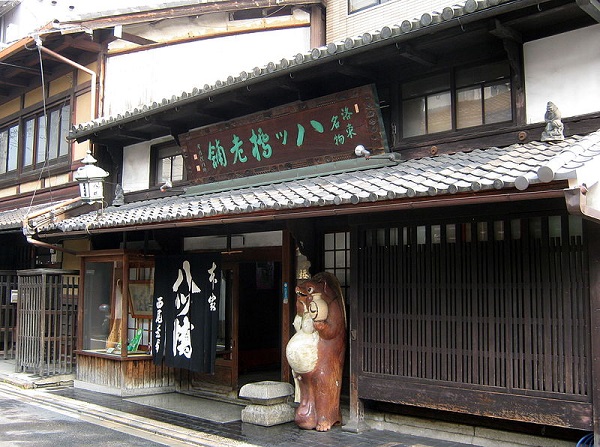
Honke Nishio Yatsuhashi Product Info, Expiration Date, Manufacturer
| Product Name | Honke Nishio Yatsuhashi |
|---|---|
| Manufacturer / Seller | |
| Address | |
| Expiration Date | |
| Place of Purchase | |
| Price |