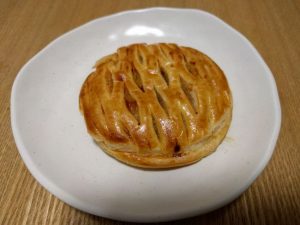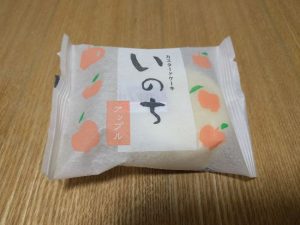
Aomori Prefecture offers a wealth of delicious food, much of it powerfully and assertively seasoned. It would be inappropriate to praise that tendency merely because Aomori has historically had a low average life expectancy, but local people have clearly favored bold flavors for generations.
Niboshi ramen made with dried sardines has become especially popular in Aomori over the past several years. Many people seem to enjoy a very hot hot-spring bath and then stop for a bowl of sardine-broth ramen on the way home.
I live in Tokyo, but tried several varieties during visits to Aomori. To be honest, the first spoonful sometimes seemed to be missing something. Yet as I continued eating, I would somehow become captivated by the dried-sardine flavor. Many bowls had that mysterious quality.
While browsing an Aomori supermarket, I discovered an impossible-to-ignore cup noodle called Geki Nibo, meaning intensely sardine-rich. I chose one as a souvenir for myself.
Geki Nibo by Toyo Suisan
This ramen was apparently so popular that it became difficult to obtain for a time.
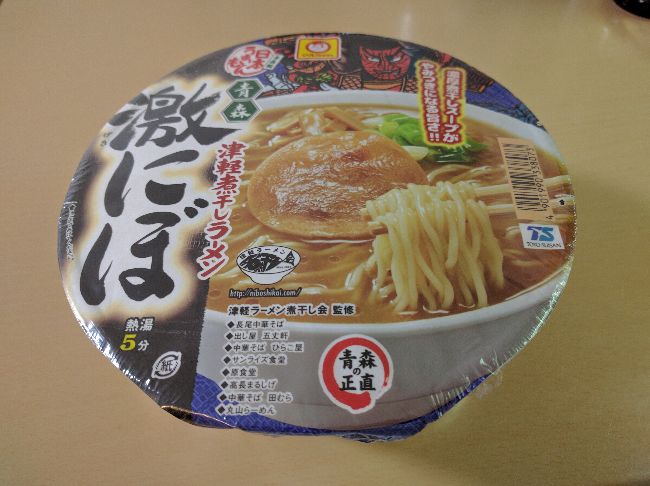
It is supervised by the Tsugaru Niboshi Ramen Association.
The names of many locally popular ramen shops are printed across the package, while the heroic Nebuta illustration in the background creates an unmistakably Aomori atmosphere.
Recently, very thick and intensely concentrated niboshi ramen has become fashionable in Aomori.
My memory of traditional Tsugaru ramen, however, is a clear, light soy-sauce broth served with thin, curly noodles.
I enjoy both styles.
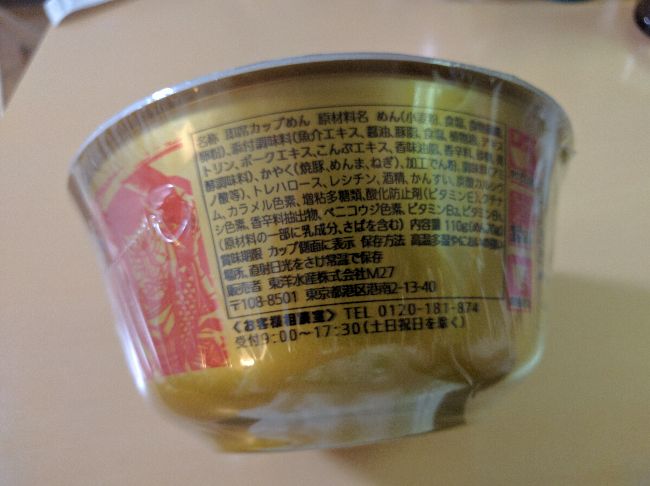
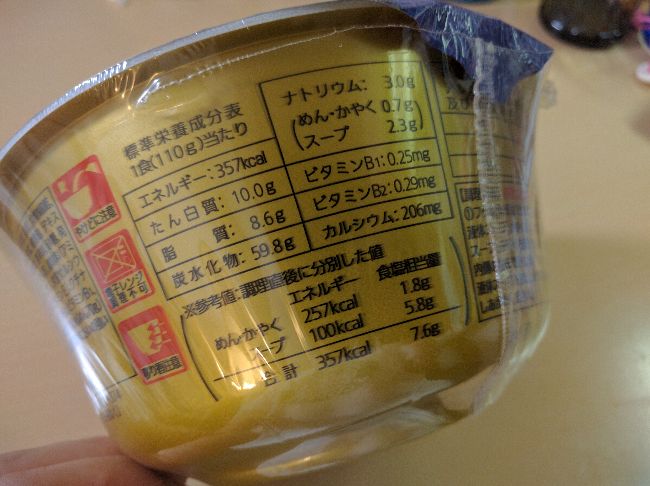
One serving contains 357 calories.
The best-before date is printed on the side and was about six months after purchase.
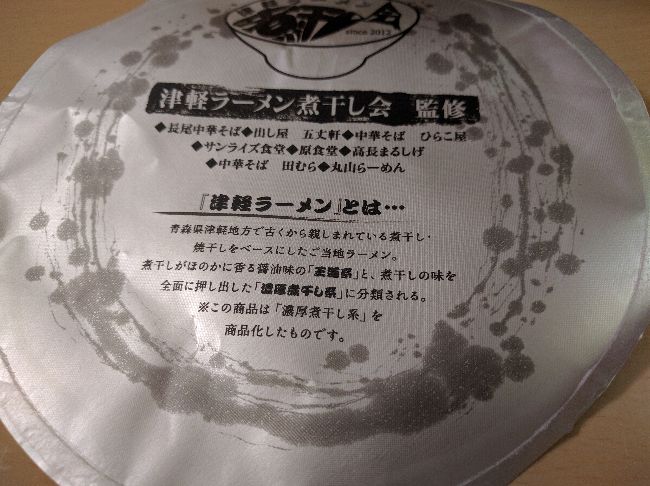
The explanation clarifies that Tsugaru ramen can be divided into the traditional standard style and the newer concentrated niboshi style.
Geki Nibo belongs to the latter category.
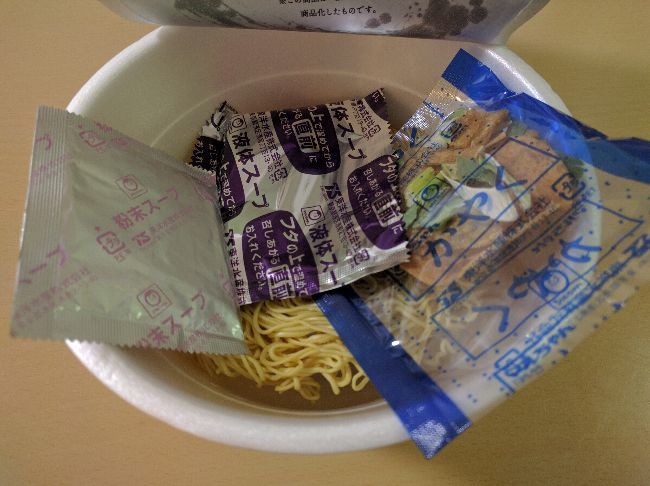
Packets of toppings, powdered soup, and liquid soup are placed on top of the noodles.
Trying Geki Nibo Ramen
Sprinkle the toppings and powdered soup over the noodles, add boiling water, and wait five minutes. I prefer firm noodles, so I opened the lid one minute early and stirred in the finishing liquid soup.
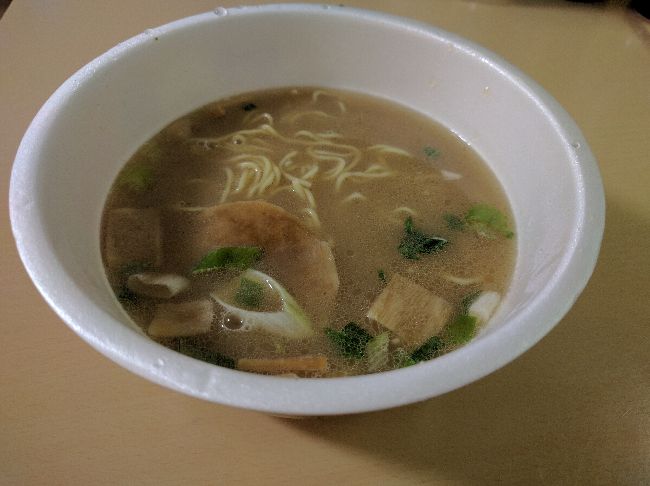
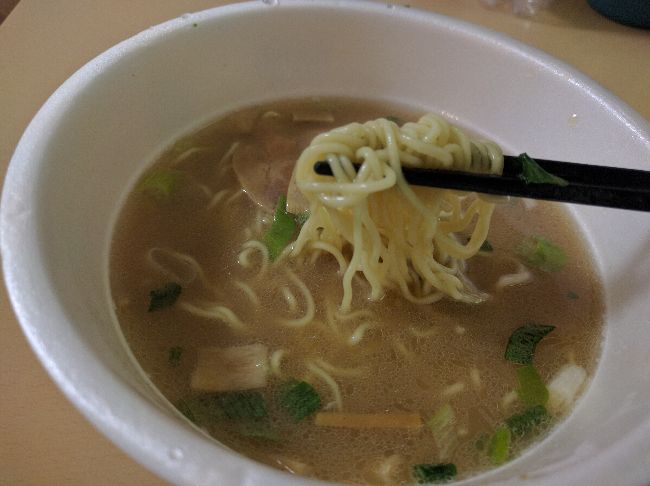
Time to eat.
The soup is rich and draws out plenty of savory flavor from the dried sardines. Its slight thickness helps it cling beautifully to the noodles.
The straight, thin noodles have an enjoyable firm and springy bite.
Green onions may play a supporting role, but they retain a welcome crispness and perform that role very well.
The slice of chashu looks like thin ham, yet it has a sweet seasoning that pairs remarkably well with the sardine broth. It is delicious.
Now I understand why some fans buy entire cases. A few days after eating it, you somehow find yourself craving another bowl.
The dramatic name Geki Nibo also has plenty of impact, making the cup suitable as a casual souvenir.
Thank you for the meal!
If one cup noodle does not feel sufficient, please also see the pages below.
- Choosing Souvenirs in Aomori: From Classic Apple Sweets to Local Specialties and Garlic Products
- Recommended Souvenirs from Hachinohe
- Recommended Souvenirs in Aomori City: Classics and Rare Local Products
Geki Nibo Product Info, Expiration Date, Manufacturer
| Product Name | Geki Nibo |
|---|---|
| Manufacturer / Seller | Toyo Suisan |
| Address | 2-13-40 Konan, Minato-ku, Tokyo |
| Expiration Date | About six months |
| Place of Purchase | Supermarkets in Aomori |
| Price | — |