
Matcha daifuku from the tea village of Shingu
Kiri no Mori Daifuku is produced in Shingu, Ehime, an area renowned for tea. I discovered it nine years before the article, while visiting my wife’s family in Takamatsu during Obon. Relatives drove us to the cool Kiri no Mori highlands for river play and hot springs. Afterward an aunt interested in confectionery returned with a package marked Kiri no Mori Daifuku.
First impressions
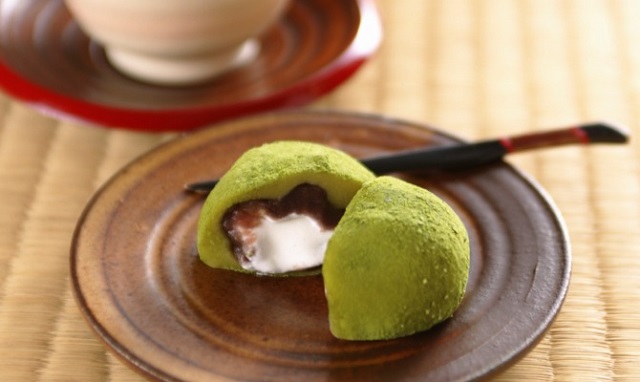
The pieces looked almost covered in green moss. The powder was kabuse matcha made in Shingu. Although Shizuoka is famous for tea, Shingu’s carefully cultivated tea also has an excellent reputation. A bite first released refined matcha fragrance and pleasant bitterness, followed by gentle anko, then an unexpected milky richness. The cross-section revealed four layers: matcha, mochi, bean paste, and fresh cream. Anko and cream formed a wonderful Japanese-Western marriage.
The mochi itself is exceptional
Many inventive daifuku rely on a surprising filling while neglecting rice cake or bean paste. Kiri no Mori does not. Every component is high quality. The mochi is smooth, soft, and stretches like freshly pounded New Year rice cake. That craftsmanship helps explain limited production.
Best with matcha—but other pairings work
Matcha is ideal, though my father claimed it paired with shochu; surprisingly, he was right. The original writer recommended Aochu from Aogashima. The sweet was created as a signature attraction for Kiri no Mori, opened in 1992 as part of village revitalization. Developers sought a new way to showcase Shingu tea and arrived at the daring combination of wagashi and fresh cream.
Popularity grew through television and the internet. It won gold in a 2015 mail-order sweets award. Online purchasing became limited to irregular lotteries reportedly exceeding one hundred applicants per available opportunity. Announcements were sent through the Kiri Mail newsletter. Current sales methods must be checked.
I prefer buying directly during the annual family visit. Shops have included the Shingu main factory store, Matsuyama, and Kiri no Kogen. Stock is not guaranteed. The product is limited daily and often sold out by late afternoon. I once reached Matsuyama too late and bought tea-flavored madeleines instead; those were also excellent, moist and restrained, and popular with male coworkers.
The road to obtaining it
On another day I arrived at opening time and found a line, with nearly everyone buying daifuku. Refrigeration is required, but delivery to distant recipients was available. The article cited roughly three days refrigerated and one month frozen; follow the current label. Shops and seasons vary, some allocations may be small, and lotteries may be used.
Matsuyama also sold Kiri no Mori roll cake and tea, making the wait dangerous for the wallet. For business travelers or people repeatedly visiting the same region, hidden specialties prevent gifts from becoming repetitive. Hunting down Kiri no Mori Daifuku can become part of the journey, and its matcha, mochi, anko, and cream reward the effort.
Why it remains memorable
The sweet succeeds because no layer is decorative. Matcha supplies aroma and bitterness, mochi gives movement, anko provides traditional sweetness, and cream rounds the finish. Each bite moves through those stages rather than tasting like a single blended filling. That precision turns a regional product created for tourism into a confection worth seeking for its own sake.
Kiri no Mori Daifuku Product Info, Expiration Date, Manufacturer
| Product Name | Kiri no Mori Daifuku |
|---|---|
| Manufacturer / Seller | - |
| Address | - |
| Expiration Date | 冷蔵は賞味期限が約3日、冷凍は約2週間 |
| Place of Purchase | - |
| Price | - |