
What is Nara’s Kakinoha-zushi?
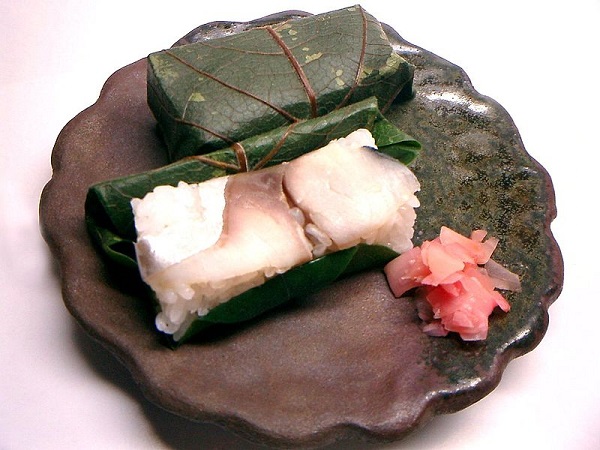
Kakinoha-zushi is a classic Nara souvenir: bite-size vinegared rice topped with mackerel, salmon, or more recently sea bream, then neatly wrapped in a persimmon leaf. I had assumed everyone in Kansai knew it, but a friend in Shizuoka tried it for the first time and loved it, reminding me that it is still not fully known nationwide.
My favorite is mackerel. Its richness and the clean acidity of the sushi rice are perfectly balanced. The fish is sliced to a moderate thickness, making it lighter than the very thick, luxurious saba-zushi sold in Kyoto and elsewhere. Thick mackerel sushi can be wonderful as a full meal, but it can also feel heavy and seems to demand piping-hot tea or clear soup. Osaka-style battera, with a thin rectangle of kelp on top, can also feel surprisingly oily. Kakinoha-zushi is easier to eat, gentle on the stomach, and suitable for ages from children to older people.
Each slice of mackerel looks slightly different, almost as if cut by hand, while the rice is neatly rectangular. The persimmon leaf may contribute freshness and has traditionally been valued for its antibacterial qualities. Most leaves are muted green, but for a short period around May some products use bright young leaves. Autumn versions may be wrapped in red-and-yellow leaves. These limited seasonal appearances make the package of sushi feel especially elegant.
Many famous Kakinoha-zushi brands
Several companies make the specialty, and local people often favor the brand they grew up with. The oiliness of the mackerel, sweetness and firmness of the rice, and tightness of the wrapping all vary slightly. Tanaka, Hiraso, Izasa, and Yamato are well-known names.
Tanaka is based in Gojo and is said to have begun in the late Meiji period. A friend from Gojo told me that, despite all the choices, Tanaka remained the natural favorite. Hiraso began in Kamiichi in Yoshino in 1861 and now has shops in Nara City; it also offers hands-on sushi-making experiences. Izasa is based in Kamikitayama, Yoshino. Its story developed from the highly praised sushi made by a local housewife in the Taisho era, and its blend of vinegared rice is particularly admired. Yamato also began in Gojo and grew from a catering business in the Showa era.
Taste is personal. I used to buy Tanaka because a shop stood near my station. After my daughter worked part-time at Izasa, I began comparing other makers. I found Tanaka’s wrapping a little mechanical and its rice somewhat firm and dry. I liked Izasa for a time, although the mackerel sometimes seemed small. My current favorite is Hiraso for the balance and size of rice and fish. Yamato felt more rustic to me. The pleasure is in finding your own favorite.
Making Kakinoha-zushi yourself
Municipal events sometimes offer workshops, and I have also helped organize one. With all ingredients prepared, participants only need to wrap the sushi, but handling a natural leaf is as satisfying as wrapping an onigiri in seaweed. The leaf smells fresh and demonstrates the wisdom of earlier generations.
My daughter said hygiene was the highest priority at the factory. Because workers handle mackerel, their hands become extremely cold, but once accustomed to the work they can wrap very quickly and enjoy the rhythm. She also taught me that Kakinoha-zushi often tastes better after resting for a day: the leaf’s fragrance transfers and the flavors settle. It is still fresh food, however, and cannot be kept for many days.
How and when to eat it
The firm leaf wrapping makes the sushi easy to carry, protects its shape, and allows it to be eaten neatly. The smallest box contains about six pieces and can be a satisfying meal for one. It tastes especially good outdoors. If there is no time to prepare a lunch, buying a box at a nearby station provides a compact meal that needs no plate.
Recommendations and precautions
Unless someone dislikes oily fish or has an allergy, the mild flavor is broadly recommendable. No chopsticks or fork are needed, and hands remain clean because the glossy front of the leaf faces inward against the rice while the drier reverse side is held. Resting improves the flavor, but the product is perishable. Tell the shop staff when you plan to eat it; they can select a box at the right stage. “Freshly made” is not automatically best, and timing is an important part of enjoying this Nara specialty.
Kakinoha-zushi Product Info, Expiration Date, Manufacturer
| Product Name | Kakinoha-zushi |
|---|---|
| Manufacturer / Seller | |
| Address | |
| Expiration Date | |
| Place of Purchase | |
| Price |